
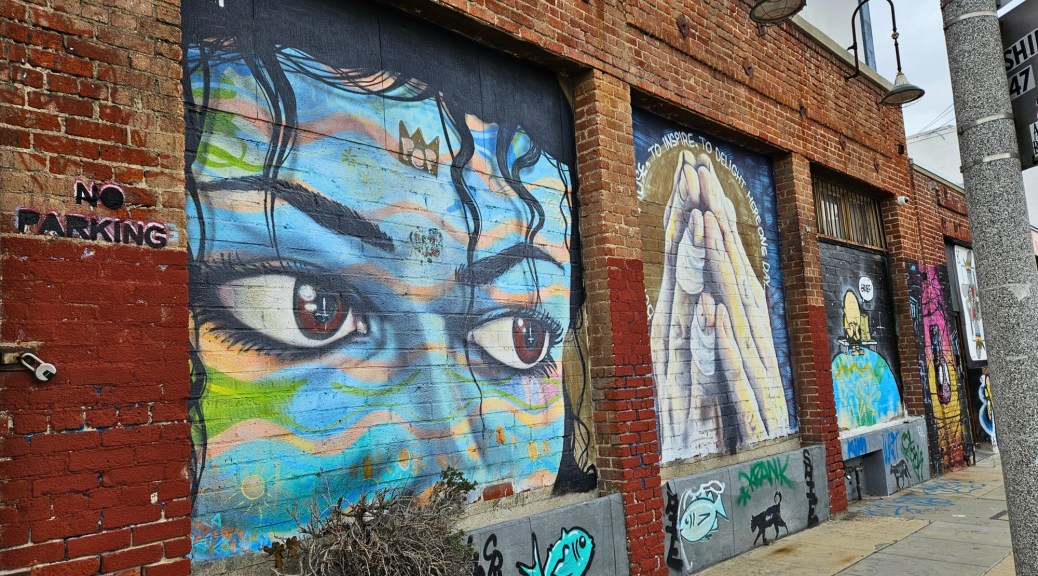
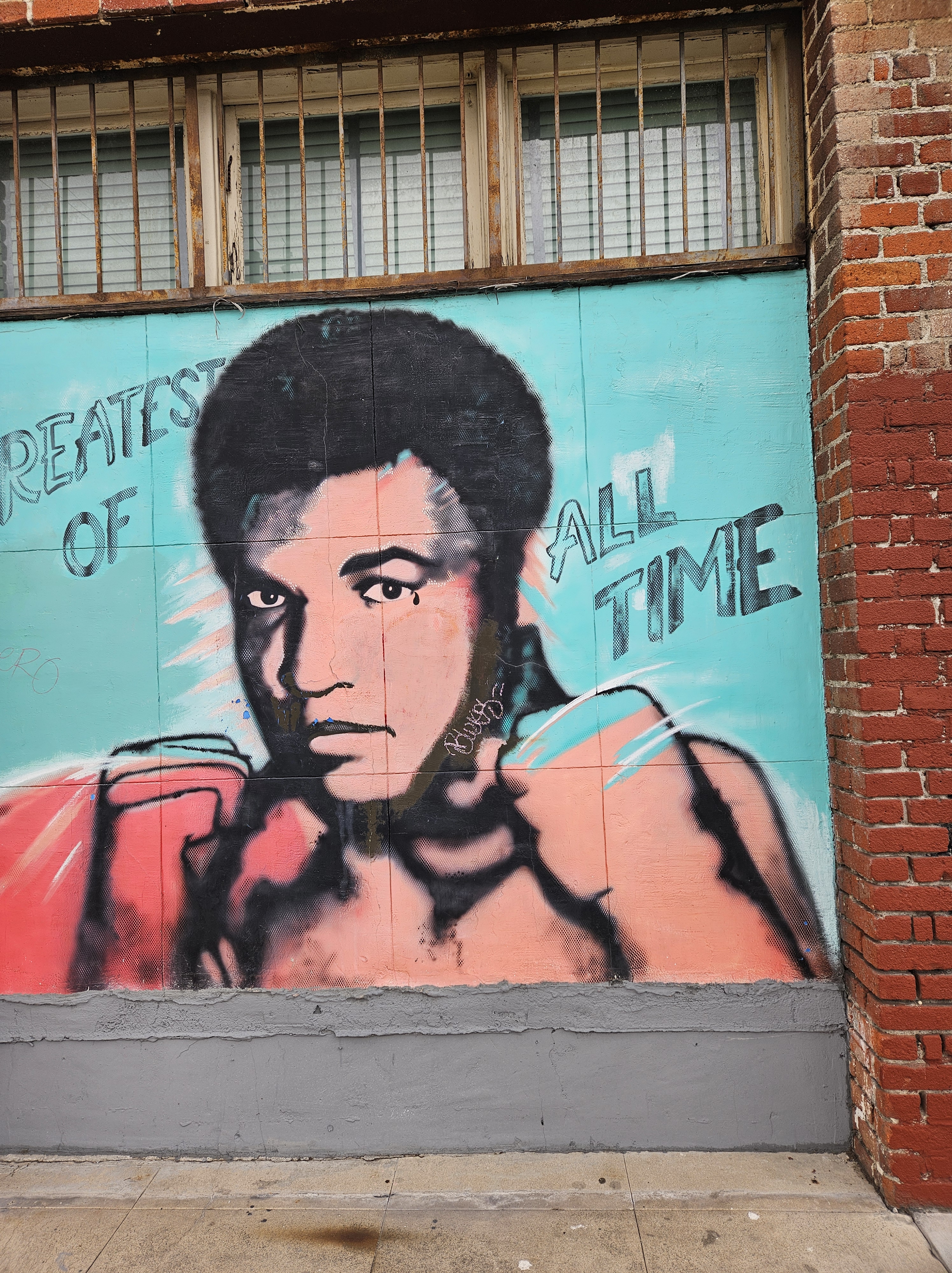
Forget the Walk of Fame—West Hollywood’s alley walls are where legends like MJ and Ali are immortalized in raw, street-level glory.
By Mac Davis Fleetwood
In West Hollywood, legacy is not confined to curated museum walls like at LACMA or the Getty. Instead, it spills out in the quiet shadows of WeHo’s forgotten blocks, just past shuttered nightclubs, empty warehouses, and graffiti-scarred alleys. Here in the Creative City, a unique and captivating kind of idolization festers—louder, rawer, and more honest than anything you’ll find embossed on the Hollywood Walk of Fame.
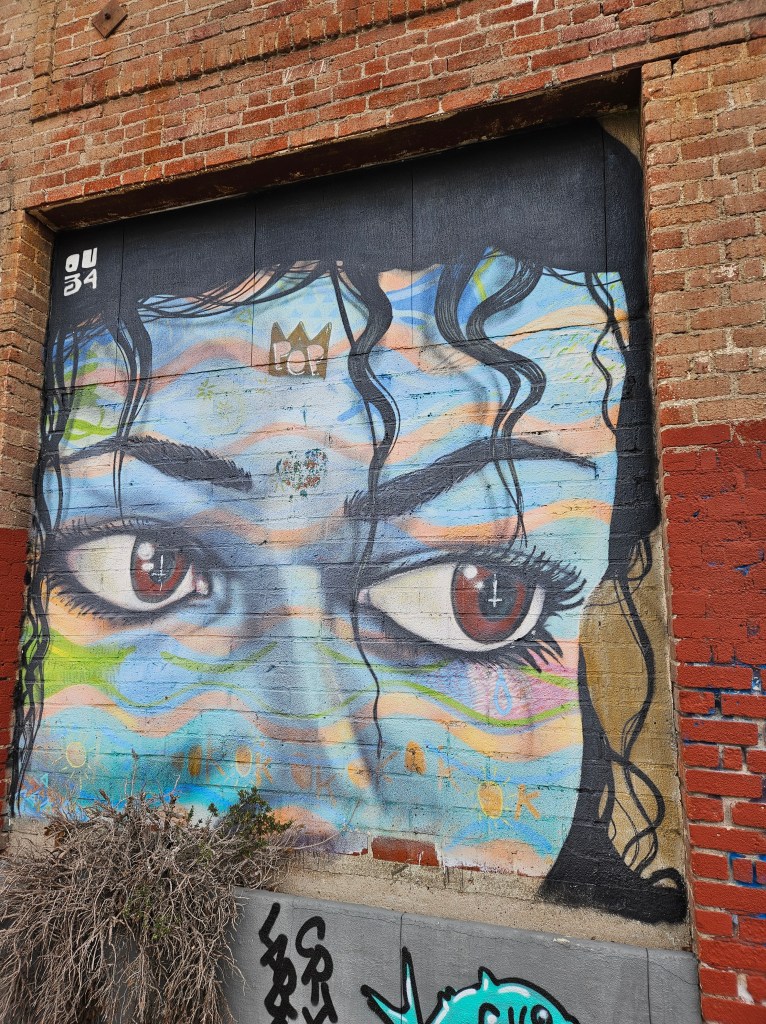
Take a turn down an alley just south of Santa Monica Boulevard and off Sycamore, and suddenly you’re face to face with a pair of familiar eyes that stop you in your tracks. Piercing, soulful, surreal. It’s the immortal King of Pop, Michael Jackson, or at least the memory of him, rendered in rich colors, framed by waves of soft pastel lines that ripple across his face like soundwaves from a song you can almost hear. His expression is both ethereal and human, as if watching over the sacred Hollywood streets he once danced across in music videos. MJ isn’t just remembered here. He’s revered in a saintly glow.
Nearby, a more aggressive iconography takes form in a striking mural of Muhammad Ali. Crafted with high-contrast tones—turquoise, crimson, charcoal—the original artwork features the biting great with fists raised and encircled by the phrase “Greatest of All Time.” Despite its weathered surroundings—or perhaps because of it’s—the mural refuses submission, mirroring Ali’s own legendary dismantling of systemic injustice: racial, cultural, and institutional.
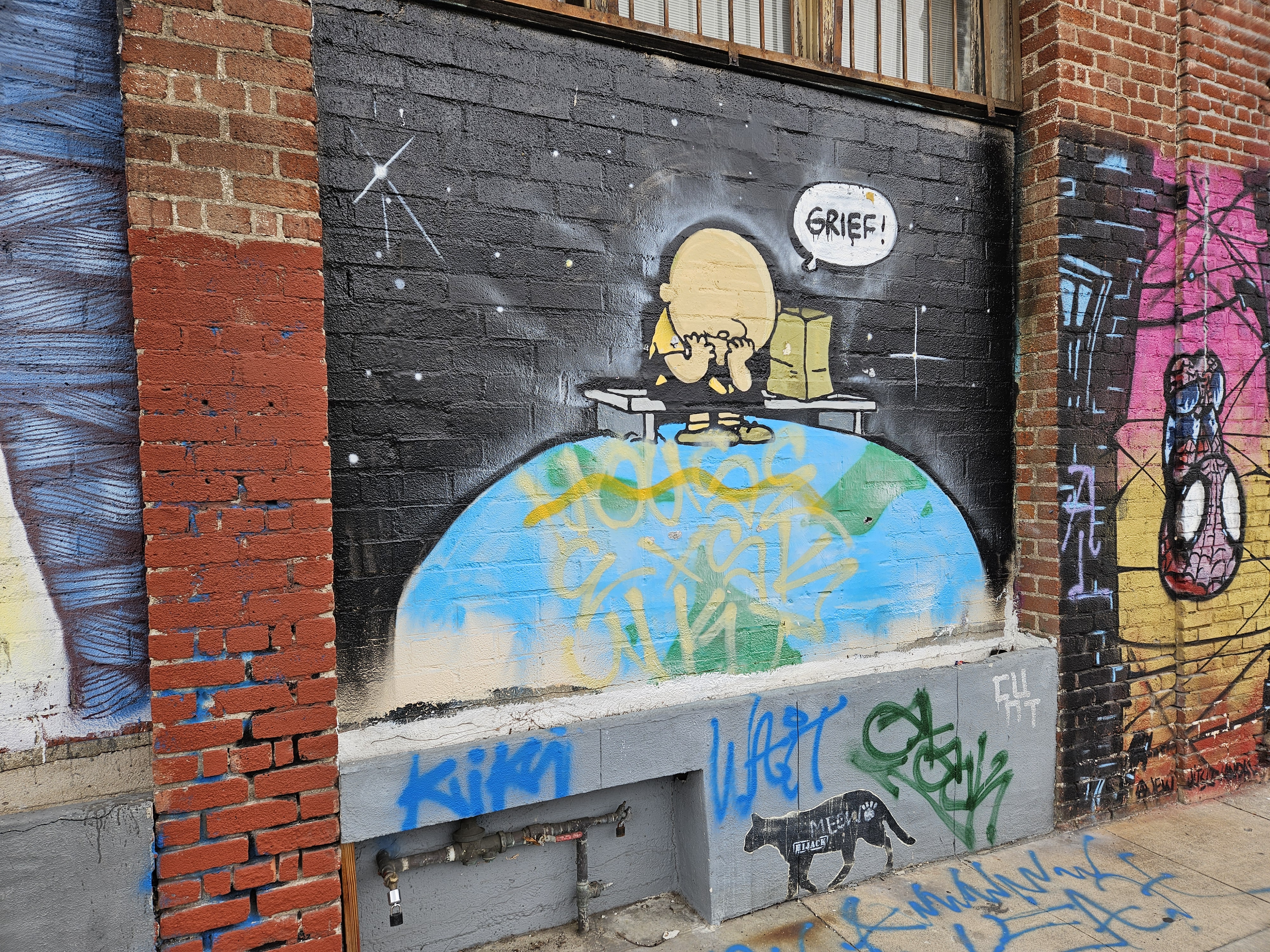
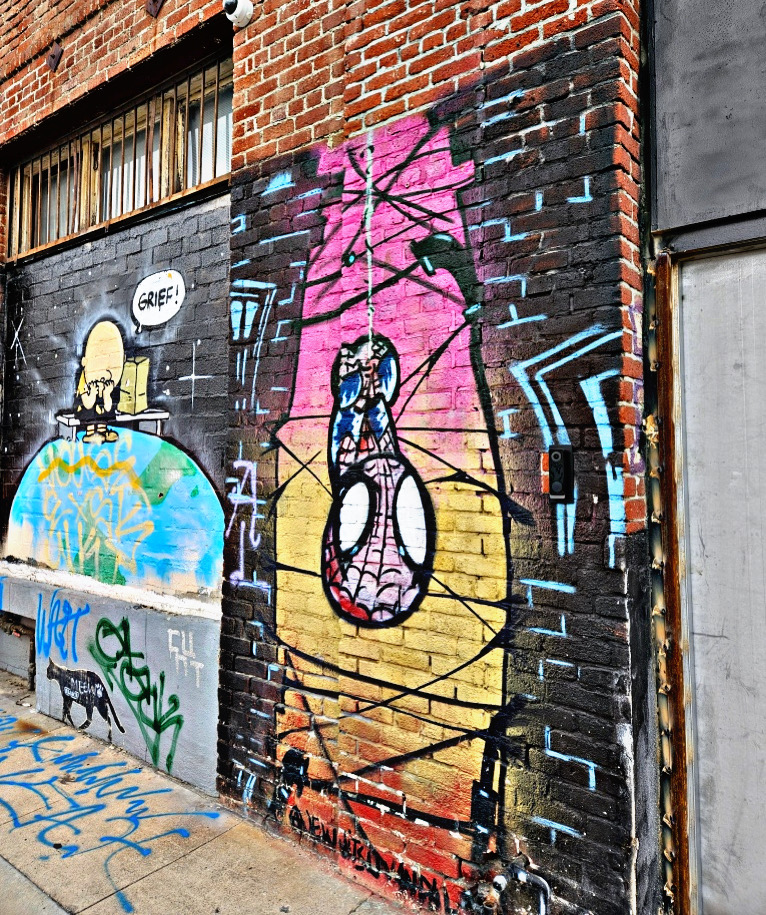
And then the surreal happens. Spider-Man swings across a sun-damaged facade, his flight path intersecting graffiti tags and layers of weathered signage. A few doors down, the Peanuts gang’s Charlie Brown has been reimagined with just enough grit to feel a little dangerous, with his timeless anxiety etched deeper into his brow. It’s nostalgia with an edge. The aura of Charles Schulz’s iconic character is more existential than endearing, as if filtered through the lens of postmodern disillusionment.
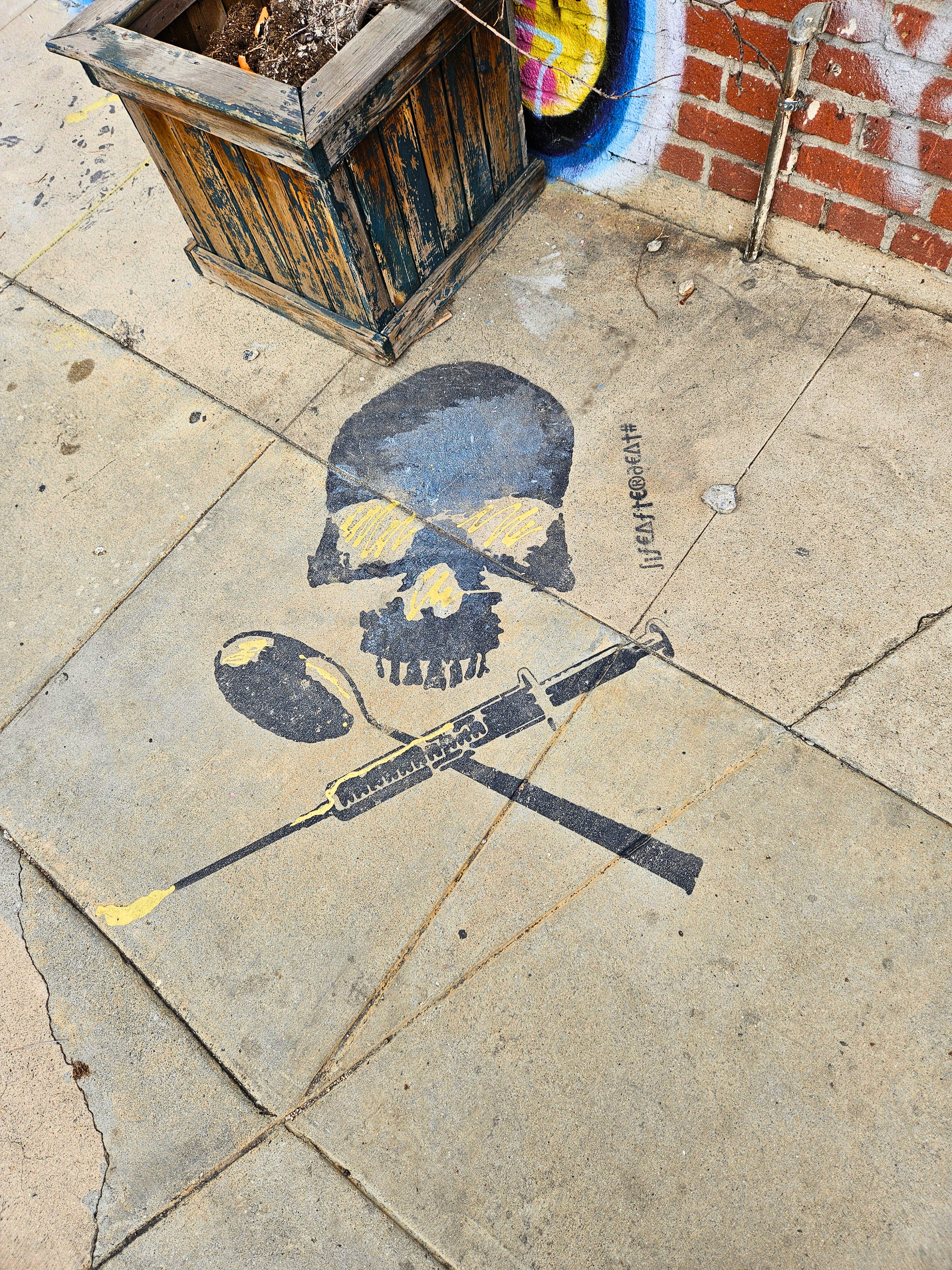
The urban art gallery then shifts style to include a random anti-drug statement on the pavement that features an ominous skull and drug paraphernalia, which is juxtaposed with a hopeful tribute to love and lovers everywhere, represented by a soft-pink 3-D mural of hearts. Perhaps it’s a reminder that when faced with any setback, like the one that has Charlie Brown looking like he just lost his best friend, to get through, all you need is love.
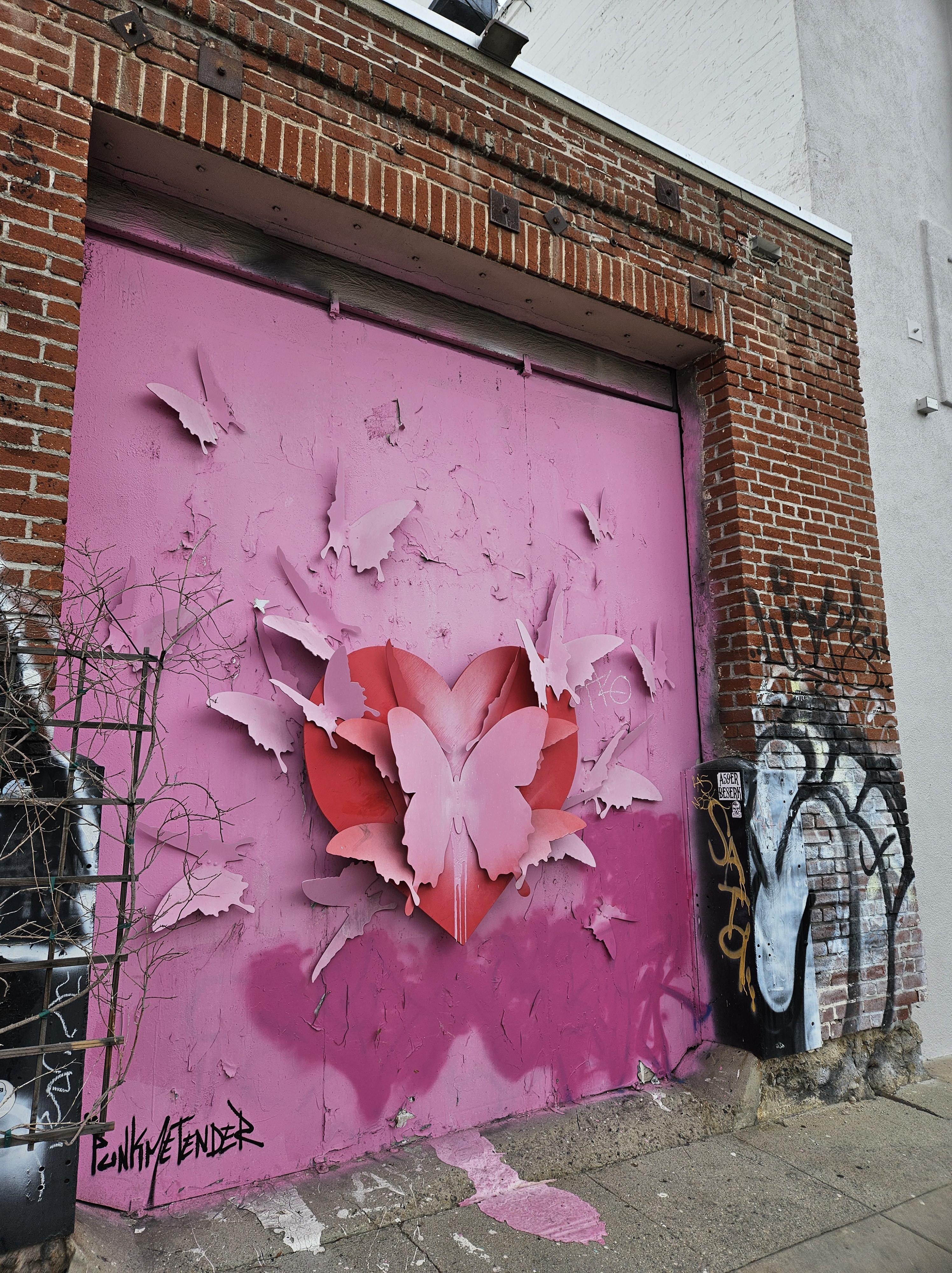
What ties this exclusive artwork all together isn’t merely their aesthetic merit—it’s the location. These murals weren’t commissioned by West Hollywood city councils or hung inside curated DTLA galleries. They exist outside institutional frameworks—uncommissioned, unsupervised, often unsigned. They were born on the walls that the city left behind, and they juxtapose fame and decay, memory and myth. There’s something deeply honest about these amazing works of art by some of L.A.’s best guerilla artists. In a town built on illusions, this art feels real and gloriously sincere.
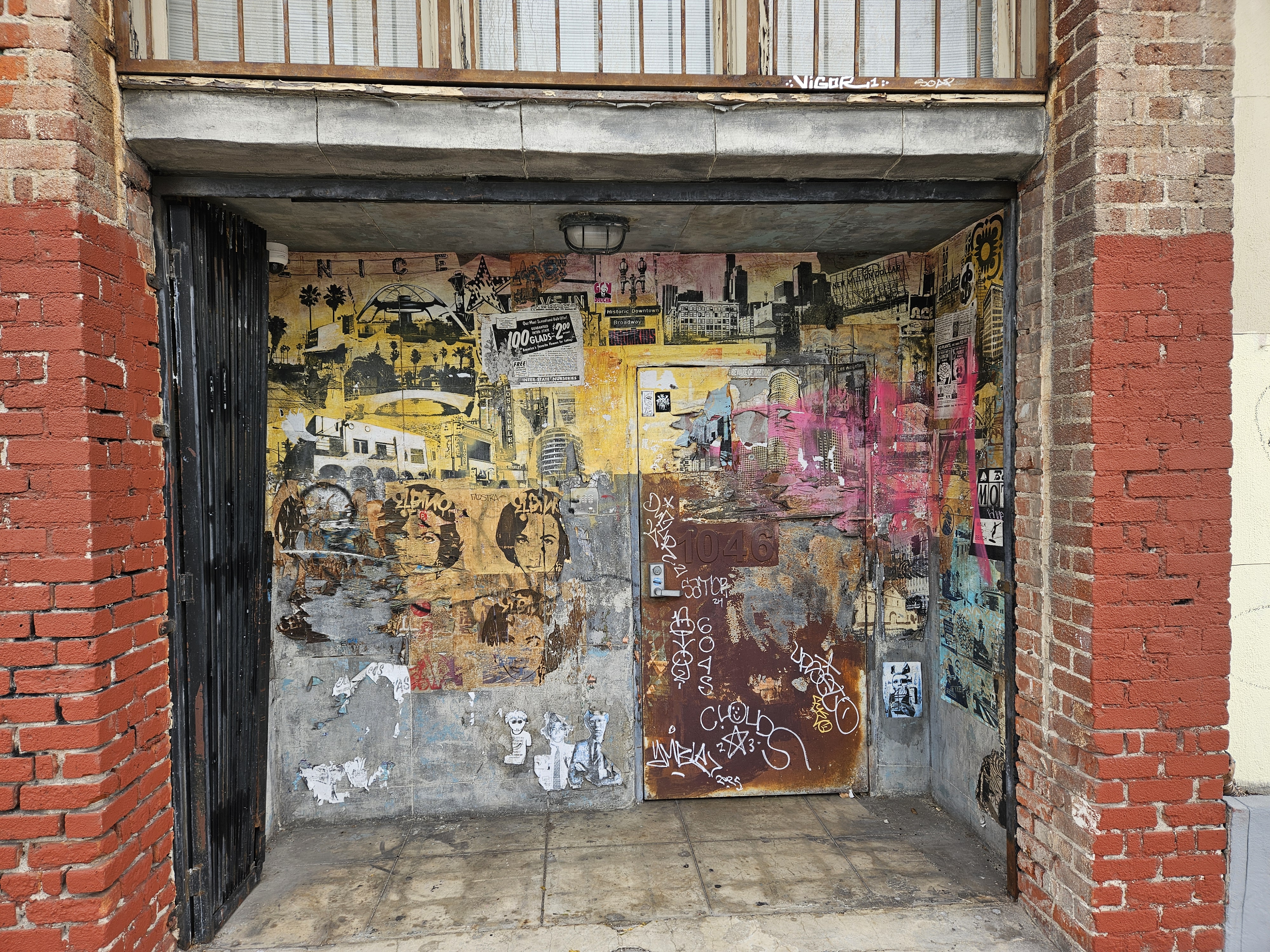
So, next time you’re in West Hollywood, don’t just look up at the billboards—look down the alley. Peer into the paint. Here, amid rusted scaffolding and crumbling plaster, you’ll find the ghosts of Hollywood’s past there. Not haunting—inspiring. And in their fading, they endure.

 SUNSETandCLARK.blog